
Finding Piscataway Residents Carefully
Start with the most specific fact. A Piscataway address is best checked first in the county parcel layer, then in the recorded-instrument index. A name without an address needs more care: use the deed index, voter-registration route, court index, or historical collection only for the distinct question each source can answer. The Township Clerk is the local records counter, but deeds, maps, and many older instruments belong with Middlesex County. That division prevents a search from stalling at the wrong office.
Each record has a limit. A parcel may name an owner but not a person living there. A voter record concerns civic registration, not every member of a household. A deed records a transaction, not an occupancy date. Treat a match as a lead until another independent record confirms the address, date, or role.
- Normalize a known address with the USPS lookup, then identify the Piscataway parcel and its block or lot.
- Compare the parcel location with the owner mailing fields before treating either one as a residence clue.
- Search the Middlesex County Clerk’s recorded-instrument index by town, party, block and lot, or date.
- For a current civic-registration question, use New Jersey’s official voter route and match the name exactly as county records hold it.
- For a past household, check the Library Local History Collection, the State Archives, and the New Brunswick-area directory runs that explicitly include Piscataway.
Piscataway Resident Records Offices
Piscataway records are kept in a practical circuit of municipal, county, and state offices. The Township Clerk handles local records routing and OPRA requests, while the Middlesex County Clerk maintains the recorded-land index. The Tax Assessor holds municipal assessment context. Elections, courts, vital records, and archives each have their own custody rules. For a full address-led sequence from parcel to deed, use the Piscataway Street Directory.
Middlesex Board of Elections
26 Kennedy Boulevard, Suite B
East Brunswick, NJ 08816
732-745-3471
Piscataway Parcel Records by Address
The Middlesex County Parcels Public layer is the most useful first map for a Piscataway address. Its available fields include OwnersName, PropLoc, owner address lines, ZIP code, old block and lot numbers, property class, land description, net value, a unique identifier, and a last-update field. The layer is updated monthly as assessor MOD-IV data changes. It is a parcel and assessment resource, not a roll of everyone at an address.
New Jersey property transparency data is a helpful second view, but it is collected annually in January. It can show owner and location, block and lot, assessment values, prior-year tax, and classification. Changes after that annual collection may not be present. For a municipal assessment-card question or a current local record, contact the Piscataway Tax Assessor at 455 Hoes Lane instead of assuming either online layer is complete.
- Parcel
- A mapped tax property with identifiers such as block and lot.
- Situs
- The physical parcel location, shown here as
PropLoc. - Owner mailing address
- The address used for owner correspondence, which may be outside Piscataway.
- Index
- A searchable list of record references, not necessarily the underlying document image.
New Jersey’s unclaimed-property search is another state name-based route, though it answers a property-claim question rather than a residence question.
State search tools can help confirm a narrow filing or claim question, but they should not be used to build a broad profile of a Piscataway resident.
Piscataway Deed Index Search Fields
The Middlesex BrowserView land-record portal lets a researcher move from a Piscataway parcel to recorded parties. Its stated notice lists deeds from 1929 forward, mortgages from 1950 forward, and other documents from 1958 forward. A county digitization announcement describes deeds reaching back to 1923, so the exact document type and date must be checked in the live portal or with the Clerk. The County Clerk is at 75 Bayard Street in New Brunswick, the county seat.
| BrowserView field | How it helps a Piscataway search | Research limit |
|---|---|---|
| Town | Limits a search to Piscataway | Options are dynamic |
| Party name | Search grantor or grantee as Last-Name First-Name | Try spelling and initial variants |
| Block and lot | Connects a deed to a mapped parcel | Formatting varies by record |
| Date and document type | Narrows deeds, mortgages, maps, liens, or releases | Dynamic list and image behavior were not captured |
| Instrument or book/page | Finds a known recording reference | Mode-specific fields |
Search both directions. The grantee is normally the party receiving an interest, while the grantor transfers one. A mortgage, release, easement, or quitclaim can link names without proving a household move. Legal description and block or lot are the safer way to distinguish same-name parties.
Exact identifiers and name formats matter across state and county indexes, so a result should be checked against an address or dated instrument.
Piscataway Voter Records Have Limits
New Jersey’s voter registration page links to the official “Am I Registered?” route. The accessible materials confirm that a name must match county data closely. Hyphens, spaces, middle initials, marriage-name changes, and nicknames can change a match. The live form’s detailed fields were not captured, so no unverified date-of-birth or identifier field belongs in a Piscataway search plan.
Under N.J.S.A. 19:31-39, an authorized public list can include name, address, party affiliation, and ward or district information, while signatures, Social Security numbers, driver-license information, and protected covered-person addresses are restricted. The Middlesex Board of Elections and County Clerk Elections Division use 26 Kennedy Boulevard, Suite B, East Brunswick for election services. Registration data is one civic record layer, not proof that someone currently occupies a property.
Note: Compare an exact-name voter match with a parcel or deed date before treating it as a Piscataway residence connection.
Current Piscataway Resident Directories
No official source is a single complete directory of Piscataway residents. The useful current sources are narrower. Property layers identify owners and parcels. The deed index names recorded parties. Election records concern registration. Court, license, and business systems identify defined legal or professional records. The right source follows the question, and a careful lookup notes what it does not establish.
| Source | Who It Lists | Keeper | Access |
|---|---|---|---|
| County parcel GIS | Parcel owners and mapping attributes | Middlesex County GIS | Public layer, monthly update note |
| State property data | Owner, location, block/lot, tax context | New Jersey transparency program | Annual January collection |
| Voter registration route | Civic registration information | New Jersey and Middlesex elections | Statutory limits apply |
| Recorded-instrument index | Grantors, grantees, and recorded parties | Middlesex County Clerk | Public search with coverage limits |
| Community associations | Public meeting or contact information | Association itself | Member directories may be restricted |
A name that appears in one of these rolls deserves a second source. The Piscataway Resident Lookup uses that verification approach for a single person, including court, vital, and historical routes.
Piscataway Court Name Search Routes
A court search must start with the right court layer. New Jersey Courts Find a Case routes civil and foreclosure matters, criminal cases, criminal judgments, judgment liens, Tax Court, and municipal matters through separate paths. The Case Jacket training view confirms docket-number, party-name, and judgment searching, a division context, Individual or Business selection, a required name, and reCAPTCHA. Short names can be exact-match sensitive, so spelling variants and the correct case category matter.
Piscataway Municipal Court offers a local disposition procedure at 555 Sidney Road. Its public disposition can include a defendant name, charges, plea, and finding. The stated fee is $10 by check or money order; an in-person request may be completed while waiting, while an older docket search can take a day. A disposition is a narrow municipal record. A full Superior Court file follows the Judiciary’s JEDS or records-request route.
The official New Jersey registry entry point requires its own current terms and identity caution.
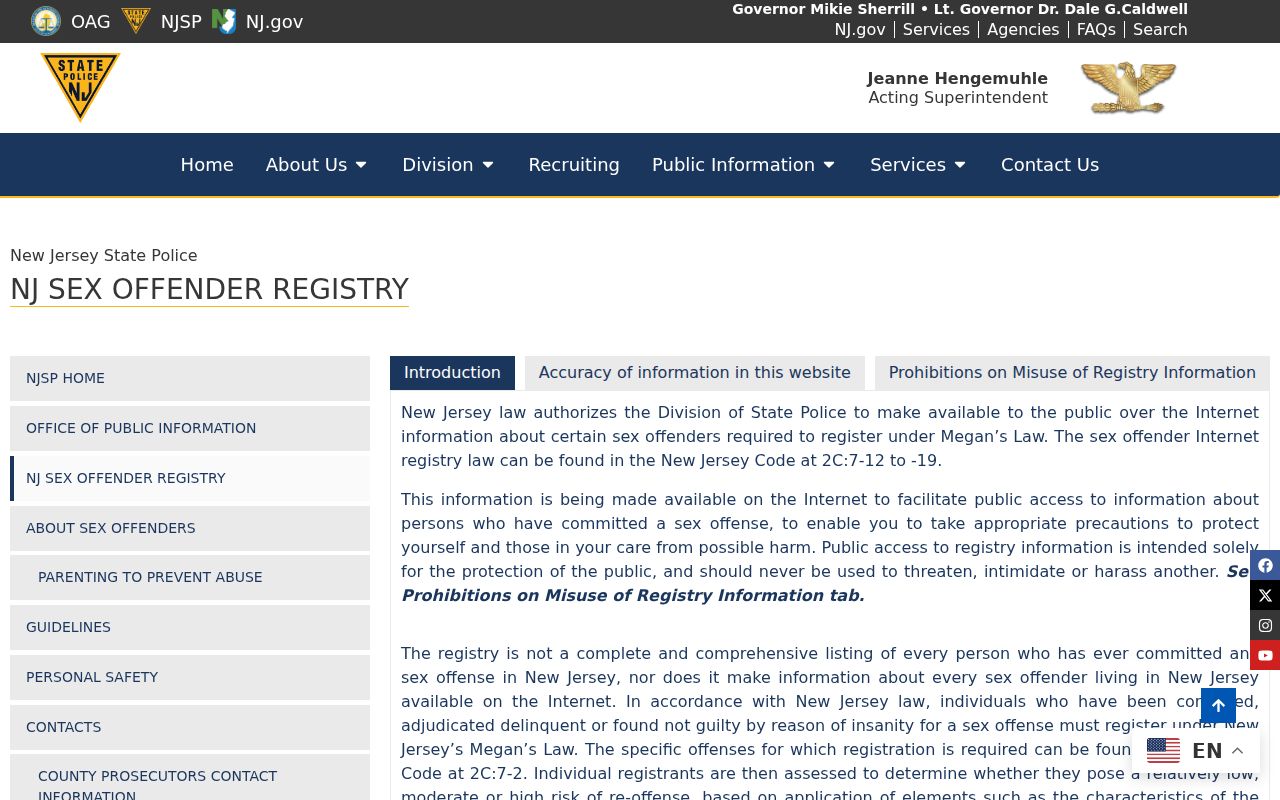
Registry, custody, and court systems answer record-specific questions. They do not prove that a same-named person is the Piscataway person being researched.
Piscataway Vital Records Are Restricted
New Jersey vital records are not an open name index. The Department of Health treats births within 80 years, marriages within 50 years, and deaths within 40 years as current events for non-genealogical requests. Eligibility, identification, and an application are required. State registration begins with births in 1925 and marriages and deaths in 1951; the State Archives holds births through 1924 and marriages and deaths through 1950.
The state form asks for identifying event details, such as full name, event city and date, and parent or spouse details when relevant. Certified-copy eligibility is limited to listed family, legal, government, or court-authorized requesters. A certification has a different informational role, but still uses the state process. The governing statutes are N.J.S.A. 26:8-40.1 et seq. and N.J.A.C. 8:2A.
Piscataway OPRA Request Options
When a municipal permit, assessment record, or clerk-held material is not online, the fallback is a defined request under the New Jersey Open Public Records Act, N.J.S.A. 47:1A-1 et seq. The statewide baseline is generally seven business days, with a written response. Piscataway’s 2024 form also describes special timeframes for recent, business-purpose, stored or archived, and Daniel’s Law requests. A records request should seek identifiable records, dates, departments, and an address or parcel, rather than ask the custodian to answer a broad question.
The local form allows hand delivery, mail, or electronic submission to the custodian. It notes that an equivalent written request can be used, but it must contain the required information. Fees or special service charges may apply and a deposit can be required when an estimate exceeds $5. A denied request should identify the basis, and the available challenge paths include Superior Court or the Government Records Council.
The Government Records Council’s OPRA page is the official state source for the statute and guidance.
OPRA gives a route to a defined public record, not a shortcut around redactions, confidentiality laws, or a protected address program.
Piscataway History Uses Local Shelves
The Piscataway Public Library Local History Collection is the local historical fallback when a modern online roll stops. At Kennedy Library, 500 Hoes Lane, it brings together family histories, maps, photographs, architectural drawings, correspondence, diaries, ledgers, manuscripts, scrapbooks, selected newspapers, and oral histories. Deep research requires an appointment through the library, while ordinary librarian help is offered on a first-come, first-served basis.
The collection is also a good way to keep historical place names in context. Piscataway’s original land grant was much larger than the modern township. Older records may use Piscataway as a broad place label, while the 1901-1908 directories may use New Brunswick or rural-route wording. Record the place label exactly, then compare it with a census, county deed, church or cemetery source.
Piscataway Address Privacy Matters
Public access has firm boundaries. New Jersey’s Address Confidentiality Program gives eligible survivors a substitute legal address and mail-forwarding route under N.J.S.A. 47:4-1 et seq. Daniel’s Law limits publication of covered officials’ and family members’ home addresses and unpublished phone numbers. The state NJGIN parcel guidance specifically warns that owner names are redacted from hosted parcel products under Daniel’s Law, even though a county layer may expose a dated owner display field.
The New Jersey State Parole Board’s information page routes public custody, parole, and registry questions to the proper official channels.
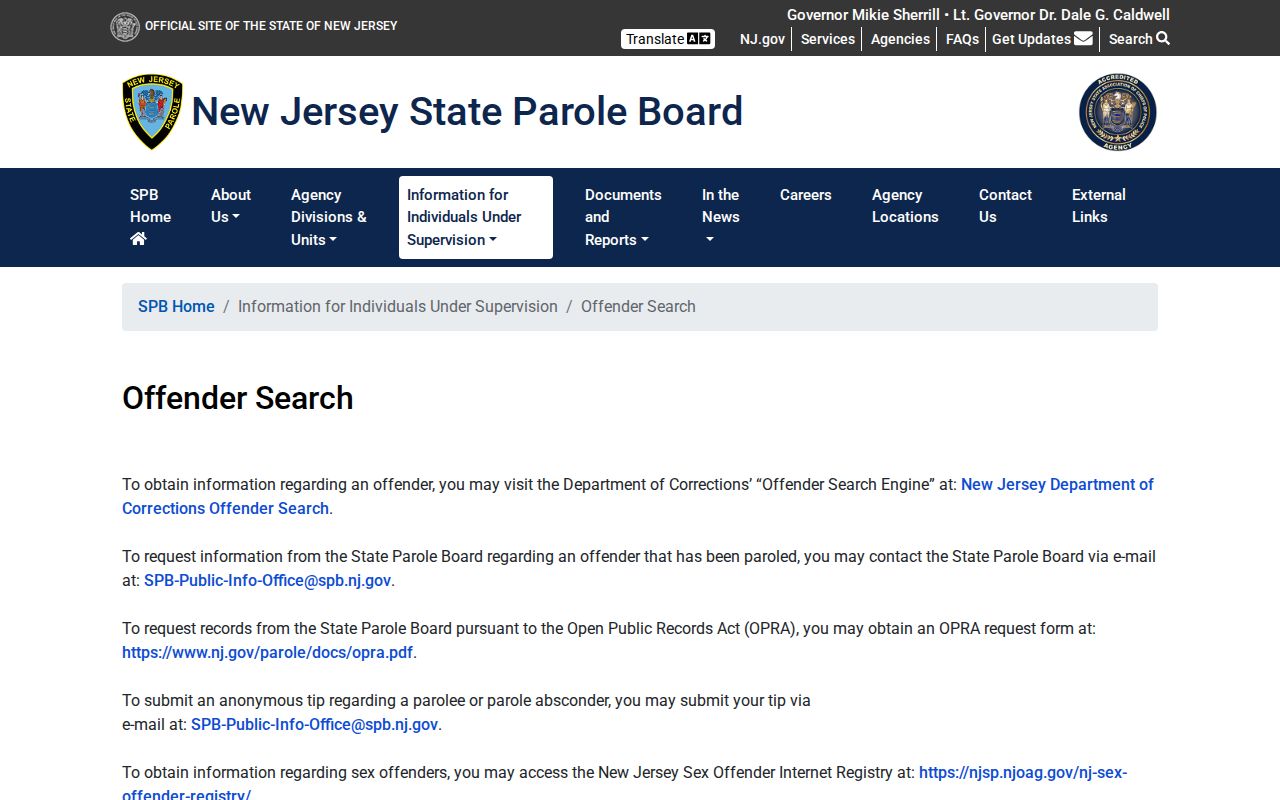
Official channels separate custody, parole, court, and registry functions so a visitor can use the narrowest appropriate record source.
Piscataway Named State Records
Some Piscataway questions are better answered by a statewide filing than an address roll. New Jersey’s Business Registration Certificate search uses a Name Control plus an FEIN, Business Entity ID, or Certificate Number. The Consumer Affairs verification service offers Person Search and Business Search for current license verification, although the exact fields depend on the selected board. Treasury’s free name-browse tool is sensitive to spacing and punctuation, so it is a discovery step rather than a complete entity-file search.
New Jersey’s Business Registration Certificate search illustrates the identifier-based state route.
A business or professional match should be treated as a filing or credential record, then compared with another source if identity matters.
Piscataway Federal Docket Access
Federal cases follow a separate path through PACER and the District of New Jersey. At the research date, PACER listed $0.10 per page, a $3 cap for a case document or docket-style document, and waiver of quarterly charges of $30 or less. PACER announced a temporary change effective January 1, 2027: $0.12 per page and a $40 quarterly waiver threshold. That future change should be rechecked before a request is made.
PACER’s pricing explanation states its then-current fee rules and document limits.
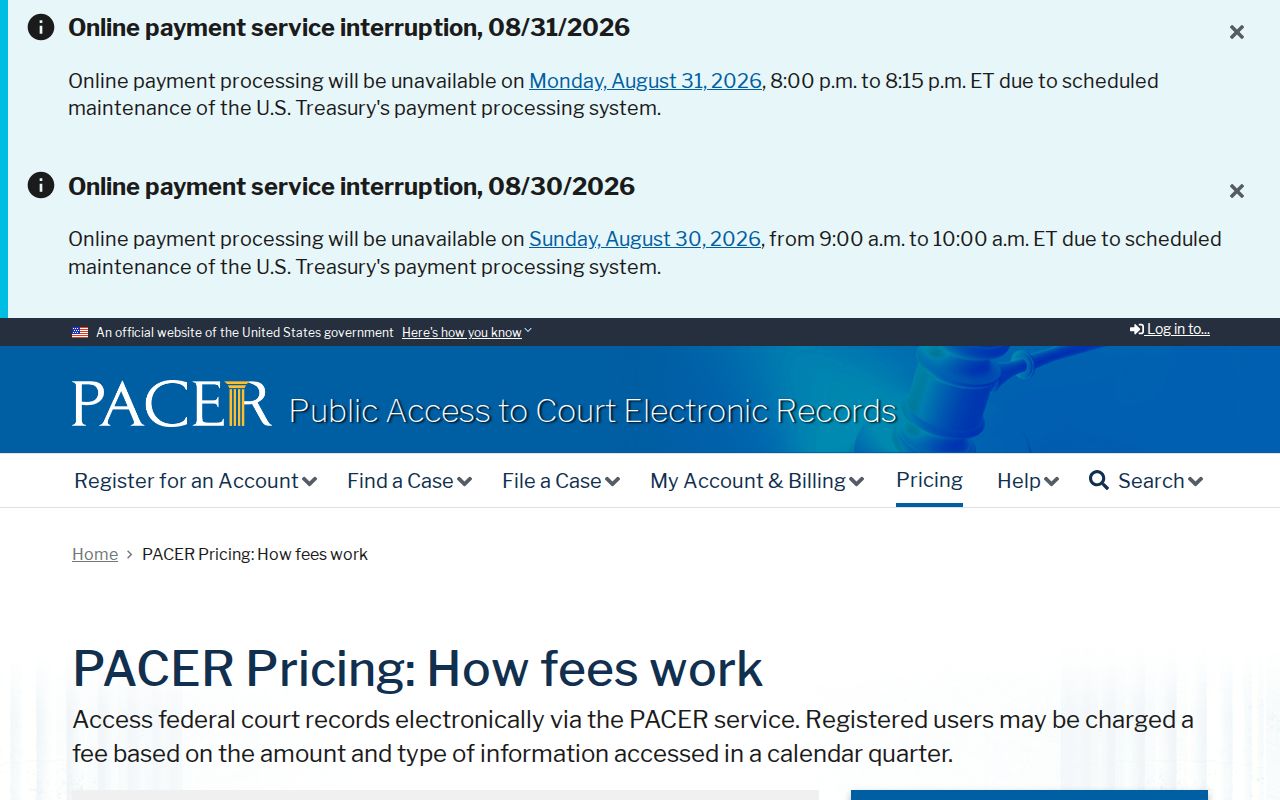
A party name alone is not enough to identify a Piscataway resident in a federal docket. Check district, case caption, dates, and party role.
Historical Piscataway Resident Directories
Piscataway often appears inside a New Brunswick-area directory rather than under a standalone title. The New Jersey State Library inventory explicitly identifies Piscataway in 1901-02, 1903-04, 1906, and 1908 J. Heidingsfeld volumes on New Brunswick Segment IV Reel 1. Those years are reliable checkpoints, not proof of continuous coverage. Later New Brunswick runs must be checked volume by volume for Piscataway scope.
Kennedy Library’s Local History Collection adds family files, maps, photographs, diaries, blueprints, correspondence, oral histories, and the seven-volume Monnette set. Deep research is by appointment. The Piscataway Directory Book explains the collections, rural-route context, and safe ways to pair a directory year with a census, deed, church, or cemetery source.